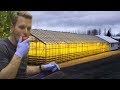
CBSE Class 10 Science – Sources of Energy – Understand how hot springs are formed and how can we use geothermal energy to produce the electricity. There are some advantages and disadvantages to this source of energy.
For all CBSE class 10 Science and Maths video lectures Subscribe to our YouTube Channel
About PrepOnGo: Best Online Learning Channel which provides CBSE class 10 interactive video lectures, NCERT solutions, solved examples and practice problems for Science (Physics, Chemistry, Biology) and Mathematics. We try to help the students understand lessons by visualising the concepts through illustrative and interactive videos.
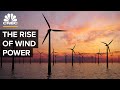
In the past decade, wind power capacity has tripled, and it’s projected to double in the decades to come. Wind is now America’s top renewable source of electricity generation, and the domestic offshore industry is finally taking off, as major manufacturers debut ever larger and more powerful turbines. While the industry faces some challenges with permitting, public opposition from various interest groups, and the obvious intermittency issues, there’s no doubt that wind is poised to play a major role in the energy transition. The question is just how fast it will grow.
» Subscribe to CNBC: https://cnb.cx/SubscribeCNBC
» Subscribe to CNBC TV: https://cnb.cx/SubscribeCNBCtelevision
» Subscribe to CNBC Classic: https://cnb.cx/SubscribeCNBCclassic
About CNBC: From ‘Wall Street’ to ‘Main Street’ to award winning original documentaries and Reality TV series, CNBC has you covered. Experience special sneak peeks of your favorite shows, exclusive video and more.
Connect with CNBC News Online
Get the latest news: https://www.cnbc.com/
Follow CNBC on LinkedIn: https://cnb.cx/LinkedInCNBC
Follow CNBC News on Facebook: https://cnb.cx/LikeCNBC
Follow CNBC News on Twitter: https://cnb.cx/FollowCNBC
Follow CNBC News on Instagram: https://cnb.cx/InstagramCNBC
Subscribe to CNBC PRO: https://cnb.cx/2NLi9AN
#CNBC
The Rise Of Wind Power In The U.S. Video Rating: / 5
Covering the topics of Geothermal Energy, Earth Energy, Sun Under Our Feet, Geothermal Energy Explained, and more!
Don´t forget to leave your comments below and to support the channel by liking the video and subscribing. Thanks!
Subscribe To The Tesla Domain ➡ https://bit.ly/2ECNiWk
WATCH NEXT 👇
✅ Ocean Batteries?! Crazy Energy Storage Breakthrough!!
🔥 RELATED VIDEOS:
✅ These New Perovskite Solar Cells Can Revolutionize The Energy Industry!!
✅ This Startup Is About To Revolutionize Hydrogen Storage For EVs!!!
✅ GAMECHANGER!! Watch Out For This 100% Silicon Nanowire Battery Tech!!
✅ This Startup Is Taking HUGE Steps For Scaling Up Its NEW Lithium Metal Battery!!!
Despite being one of the cheapest and most reliable sources of renewable energy, there is no harnessing of heat from the ground outside of Iceland. In this video, we are going to learn what is Geothermal energy, its advantages, and disadvantages, what are those challenges that stop us from getting energy from Earth, and much more. So be sure to watch until the end.
What is geothermal energy?
Geothermal energy is heat in the earth. The word geothermal comes from the Greek words ‘geo’ which means earth and ‘therm’ means heat. Geothermal energy is a renewable energy source because heat is continuously produced in the earth. People use geothermal energy to bathe, heat buildings, and generate electricity.
How does it work?
Humans can harvest geothermal energy by:
-Geothermal power plants, using heat from within the earth to generate steam to generate electricity.
And,
-Geothermal heat pumps, using heat near the earth’s surface to heat water or heat buildings.
Geothermal power plant
In geothermal power plants, wells are drilled 1 or 2 miles into the earth to pump steam or hot water to the surface. You’ll likely find one of these power stations in an area with lots of hot springs, geysers, or volcanic activity, as these are places where the earth is extremely hot just beneath its surface.
Now, let’s break down its working step-by-step:
-Hot water is pumped from below through a high-pressure well.
-When the water reaches the surface, the pressure drops, causing the water to turn into steam.
-The steam spins a turbine, which is connected to a generator that produces electricity.
-The steam is cooled in the cooling tower and condensed back into the water.
-The cooled water is pumped back to earth to start the process again.
Not all geothermal energy comes from power plants. Geothermal heat pumps can do everything from heating and cooling homes to heating swimming pools. These systems transfer heat by pumping water or a refrigerant-a special type of liquid, through pipes just below the earth’s surface, where the temperature is constantly between 50 and 60 degrees Fahrenheit.
🤩 The Tesla Domain is the Number 1 channel to go when you want to be up to date with the latest Tesla news, rumors, and insights. Covering everything related to Elon Musk, Tesla, Space X, The Boring Company, Neuralink, Hyperloop, and the EV industry as a whole! We post videos about every Tesla vehicle, including the Cybertruck, Model 3, Model Y, Model S, Model X, Semi, Roadster, and all the other upcoming EVs from different car manufacturers!
___________________________________________________________________________________
🥸 Disclaimer: All the information provided on this channel and/or videos is of general nature and for entertainment purposes only, and you should use it as a place to start your own research. All reasonable efforts have been made to ensure the accuracy of the information provided, working with sources that we believe to be reliable, but subject to change at any time, without notice.
___________________________________________________________________________________
🗣 Copyright Disclaimer: Section 107 of the U.S. Copyright Act states: “Notwithstanding the provisions of sections 106 and 106A, the fair use of a copyrighted work, including such use by reproduction in copies or phonorecords or by any other means specified by that section, for purposes such as criticism, comment, news reporting, teaching (including multiple copies for classroom use), scholarship, or research, is not an infringement of copyright.”
This video could contain certain copyrighted video clips, pictures, or photographs that were not specifically authorized to be used by the copyright holder(s), but which we believe in good faith are protected by federal law and the fair use doctrine for one or more of the reasons noted above.
For copyright issues or business inquires please contact us at successpillyt@gmail.com
#elonmusk #tesla #thetesladomain Video Rating: / 5
What are disadvantages of geothermal energy? Do they outweigh pros for geothermal energy? Should more people get geothermal energy at home? Learn more in this video!
Visit our channel Dynamic Earth Learning for other introductory sustainability and science videos!
📝 See Dynamic Earth Learning’s lesson plan for this video in our store:
https://www.teacherspayteachers.com/Product/Geothermal-Energy-Advantages-Disadvantages-Distance-Learning-7021220?utm_source=geothermal%20youtube&utm_campaign=geothermal%20youtube
👀 Check out the accompanying blog post for More Food Without Risking Natural Resources on Dynamic Earth Learning’s website:
https://dynamicearthlearning.com/geothermal/ #middleschool #highschool #education #distancelearning #onlinelearning #homeschool #virtuallearning #earthday #sustainabilityeducation
A short animation that explains what is geothermal energy and the process used to obtain this renewable energy resource. Part of a series of animated videos that helps explain the volcanism in the Easter Caribbean. The series was commissioned under The Volcano Ready Communities Project (VRCP) St. Vincent and the Grenadines. The project is funded by the Caribbean Development Bank through The Community Disaster Risk Reduction Fund and implemented by The UWI-SRC in collaboration with project partners NEMO St. Vincent and the Grenadines, St. Vincent and the Grenadines Red Cross Society, The Ministry of National Mobilisation Social development & Youth SVG & API – The Agency For Public Information : St. Vincent and the Grenadines. For more information on the VRCP can be found here: https://bit.ly/3kcnaSA Video Rating: / 5
◼️Best Home Wind Turbines 2021
In this video we are going to show you the 5 Best Home Wind Turbines In 2021 on the market.
◼️Product Links United State :
5) Missouri General Freedom II Wind Turbine ☑️ https://amzn.to/3pnaSYU
4) Nature Power Wind Turbine ☑️ https://amzn.to/2WM6s1s
3) Automaxx Windmill Home Wind Turbine ☑️ https://amzn.to/3ppfjlT
2) Windmax 5 Blade Home Wind Turbine ☑️ https://amzn.to/3nQrIz9
1) Happybuy Home Wind Turbine ☑️ https://amzn.to/2KS406S
◼️Product Links Canada :
5) Missouri General Freedom II Wind Turbine ☑️ https://amzn.to/3rq0JN3
4) Nature Power Wind Turbine ☑️ https://amzn.to/3mNWveA
3) Automaxx Windmill Home Wind Turbine ☑️ https://amzn.to/3hi29Eq
2) Windmax 5 Blade Home Wind Turbine ☑️ https://amzn.to/3mM9hdz
1) Happybuy Home Wind Turbine ☑️ https://amzn.to/2JkCiPI
◼️For Canada Best Rated Home Wind Turbines:
MarsRock Small Wind Turbine Generator ☑️ https://amzn.to/38usueo
WINDMILL 1500W 24V 60A Wind Turbine ☑️ https://amzn.to/34MaICp
Dyna-Living Wind Turbine Generator 400W ☑️ https://amzn.to/2WNEDWE
High Wind Turbine Generator ☑️ https://amzn.to/3mQVOko
When you are about to purchase a product, you will be confused with all the products available on the market. We are here to help you with that.You can buy or purchase other Products by watching our channel reviews. We have spent at least 18 hours on each product, I give you the best opinion. The top five products we have listed in each video are the best products available in the market at the moment.
◼️Have you ever dreamed of going off-grid but have no idea how to keep your TV, laptop, and other devices powered as you cast off the shackles of society in search of a more simple life? Or perhaps your house stands right in the middle of Hurricane Alley, and you want a reliable backup the next time the weather threatens to take you to Oz. Maybe you just want to find a more eco-friendly power solution for your home, and with one of the best home wind turbines, you can do just that.
Unlike a typical wind turbine you might see standing in a field on your drive to work, a personal home wind turbine isn’t an eyesore that will make the neighbors hold protest placards and picket outside your home, and with a larger focus on protecting the planet than ever before, you’ll definitely get some brownie points, too.
◼️More Video:
Above Ground Swimming Pools
https://youtu.be/ptUVG7WueVE
ID Card Printers
https://youtu.be/9vE0XvmkPAA
Smart Air Conditioners
https://youtu.be/cRW-09C8odg
Best GPS Trackers
https://youtu.be/zCquCpG2394
Best Wireless Headphones
https://youtu.be/9nQDZ6kyd6E
Subscribe My Channel: https://www.youtube.com/channel/UCqy48Vriplt6HWIrfckvBAA?sub_confirmation=1
◼️Disclaimer:
Portions of footage found in this video is not original content produced by SmartTechZone. Portions of stock footage of products was gathered from multiple sources including, manufactures, fellow creators and various other sources. If something belongs to you, and you want it to be removed, please do not hesitate to contact us at brsfu.info@gmail.com Video Rating: / 5
ABC News’ Ginger Zee reports on the power of wind in building a renewable energy future, traveling to Block Island, RI to visit America’s oldest offshore wind farm. Video Rating: / 5
Today, we’re talking about heat. The Earth is hot. And no, we’re not referring to Global Warming — at least, not this time. The Earth is hot on the inside. How hot could it actually be, you ask? The inner core of the Earth is almost 11,000°F which is as hot as the surface of the sun!
This heat provides Geothermal Energy: a constant supply of completely clean, sustainable energy!
Humans have been using this energy source for thousands of years, for bathing and cooking. Then, in 1904 in Larderello, Italy, a plant was built to generate electricity from geothermal steam. Initially, this power was enough to light only 5 light bulbs. But today, this plant generates 545 megawatts of electricity. For perspective, a typical coal power plant provides about 600 megawatts.
Geothermal energy comes in either liquid or steam form, and sits within varying depths of the Earth’s layers. The 4 main layers of the Earth — the Crust, Mantle, Outer Core, and Inner Core — all provide different levels of heat within the rock also and magma. Even the very upper 10 feet of the Crust provides consistent heat, between about 50 to 60° Fahrenheit, which can be used via a geothermal heat pump to heat or cool buildings.
Did you know that 90% of the heating for buildings in Iceland is provided this way?
From only slighter deeper within the Earth, geothermal water can also be used for heating buildings or, as seen in Boise, Idaho, for melting snow from the sidewalks.
On a larger scale, there are three types of geothermal power plants: dry steam, flash, and binary. Dry steam literally takes the steam out of a fracture in the ground and uses it to drive a turbine.
Flash plants pull deep, high pressure hot water into pools of cool water, thereby making steam, which drives a turbine.
In binary plants, the hot water extracted is passed by another fluid which has a lower boiling point than water, thereby creating vapor which drives a turbine. Binary plants are likely to be the most common geothermal power plants of the future, as they require only a medium temperature field to begin with.
Then of course there’s raw magma…but the tech to capture this heat is a way off.
Hot dry rock is one of the best sources for geothermal energy, as it’s abundant and available widely across the globe. To use this, there must be two wells drilled to about 3-5 miles, and spaced about 2 miles apart. Cold water is injected under high pressure down one well, and then drawn up from the second well, as hot water. This technique is called an Enhanced Geothermal System.
But it’s hard to get access to the right rocks, and we can’t yet achieve water flow rates which would make this system commercially feasible for providing electricity.
Yet.
It’s a work in progress.
Proudly, the U.S. leads the world in the amount of electricity generated from geothermal energy production, with the most developed geothermal field being The Geysers in Northern California. But before we pat ourselves on the back too hard, this still only equated to 0.4% of the total U.S. electricity requirement for 2017. We’re in a position where we’ve been given this amazing resource, we just have to figure out how to use it. It won’t be fast or cheap, but geothermal energy is the absolute largest renewable, sustainable and clean energy source we have.
It sounds almost too good to be true… So, are there disadvantages?
Unfortunately, yes.
There are minor concerns around the release of hydrogen sulfide, carbon dioxide, methane and ammonia, but it is far below the levels of greenhouse gases released through fossil fuel mining and energy production.
Also, the drilling needs to be done mindfully – given the location of accessing this heat, between tectonic plates, there is sometimes concern around increasing the risk of earthquakes. But most downsides are related to individual access and utilization of geothermal energy, rather than when it’s done on a commercial scale.
And these small downsides are put into perspective easily: geothermal plants use only 10% of the land requirement for a coal or wind power plant, and 0.2% of the freshwater requirement of nuclear, coal or oil. Another huge advantage geothermal energy has over other renewable sources is that it’s not dependent on the sun, like solar, wave, or hydro energy.
This makes it far more reliable.
So next time you’re taking a relaxing dip in a hot spring, think about how lucky we are to inhabit this Earth, and how amazing our natural resources are. Then plan one extra way of being more sustainable tomorrow than you were yesterday. Video Rating: / 5
• Find out more about our project:
https://jaescompany.com/elearning.php…
• Here are some products installed by our technicians:
https://jaescompany.com/catalogo_prodotti.php?search_product=rotore&lang=en
https://jaescompany.com/catalogo_marche.php?lang=en
Wind turbines are devices that convert the wind’s kinetic energy into electrical energy.
We can simply describe the wind as moving air, caused by differences in atmospheric pressure between different regions of our planet.
Differences in atmospheric pressure arise as a result of temperature differences.
When the air moves from an high pressure region into a low-pressure region, we feel the moving air as wind.
On the other hand, we can describe wind energy as the process in which wind is used to generate mechanical energy or electricity.
Since the beginnings of civilization man has always took advantage of wind energy: from the simple sail boats, to the grinding grain with the windmills, up to the actual production of electricity thanks to the wind energy converters, also known as WIND TURBINES.
There are different types and different sizes of wind turbines.
In this video we will focus on the most common horizontal axis turbines:
-We’ll find out which are the main components of this particular type of wind turbine
-We will understand how these devices are able to transform wind energy into electric current.
-We’ll see why don’t wind turbines have more than 3 blades, through the observation of their airfoil shape.
-And we will also see what are the main causes of accidents that can occur during the operation of these devices.
The first wind turbines were built towards the end of the nineteenth century with the aim of supplying electricity to small isolated villages
In the following years, the gradual structural and technological improvements of these devices, allowed the creation of real wind farms entirely dedicated to the production of electricity
Nowadays there are about 26 companies in the world specialized in the production of wind turbines
As we already mentioned at the beginning of this video, wind turbines transform mechanical energy into electrical energy. The wind energy caught by the wind turbines is in fact transferred thanks to a mechanical shaft to a generator.
The generator transforms the rotation energy into electrical energy, which in turn is transferred to a transformer, usually placed at the base of the wind tower. The transformer acts as a link between wind turbines and distribution grid. It steps up the low output voltage from the generator to higher distribution voltage level.
Let’s take a look at the various components of a wind turbine:
This is the TOWER, one of the most important parts. It represents the supporting structure of the wind turbine and has the function of absorbing the vibrations generated by the rotary motion of the blades.
These are the BLADES which are aerodynamically optimized to capture the maximum power from the wind and transfer it to the rotor hub. Each blade is usually 20 m or more in length, depending on the power level.
The ROTOR is the rotating part of the wind turbine. The rotor hub holds the wind turbine blades while connected to the gearbox via the low-speed shaft. Here we can find the pitch control system. Thanks to the pitch control, blades are turned in their longitudinal axis to change the angle of attack according to the wind directions. This mechanism also blocks the rotation of the rotor when the wind is too strong, or too weak.
The NACELLE is instead the enclosure of the wind turbine that houses all of the generating components, including: the gear box, the braking system and the generator, but also the pitch control system and the yaw system, which is responsible for the orientation of the wind turbine rotor towards the wind.
An anemometer places at the rear of the nacelle, in fact, constantly detects the wind direction. Whenever there’s a change in wind direction, the anenometer sends a signal to the yaw system, that provides to rotate the entire nacelle and consequently the rotor and the blades , to meet the wind at the best angle.
But now let’s see in detail what happens when the wind turbine goes into action:
The blades starts to turn when the wind reaches the so called “cut-in wind speed”, that is the point at which the turbine starts generating electricity from turning.
The rotor is connected to the drive shaft, which rotates inside the necelle.
The rotational energy of the drive shaft is transformed into electrical energy by the generator.
A generator is in fact a device that uses electromagnetic induction to produce electrical voltage… Video Rating: / 5
In Iceland, geothermal power is being used for almost everything — from heating homes to supplying therapeutic spas year round. Scientists and engineers from around the world are participating in a course at the United Nations University (UNU) to learn how to use geothermal energy in their own countries from leading experts in Iceland.
UNIA Programme # 1365
Transcript: http://www.un.org/webcast/pdfs/unia1365.pdf Video Rating: / 5
A small company in Saskatchewan is building what could become Canada’s first geothermal power plant, which could launch a green revolution for the energy industry and the people who work in it.
Watch The National live on YouTube Sunday-Friday at 9 p.m. ET
Subscribe to The National:
https://www.youtube.com/user/CBCTheNational?sub_confirmation=1
Connect with The National online:
Facebook | https://www.facebook.com/thenational
Twitter | https://twitter.com/CBCTheNational
Instagram | https://www.instagram.com/cbcthenational
More from CBC News | https://www.cbc.ca/news
The National is CBC’s flagship nightly news program, featuring the day’s top stories with in-depth and original journalism, with hosts Adrienne Arsenault and Andrew Chang in Toronto, Ian Hanomansing in Vancouver and the CBC’s chief political correspondent, Rosemary Barton in Ottawa. Video Rating: / 5
Renewable energy provides almost all electricity in Iceland. But what is about Iceland’s unique geology that allows it to produce such cheap renewable energy?
Want to also become one of BBC Earth’s presenters? Check out how to here: http://bit.ly/earthpresenter and apply before July 5, 2018.
Subscribe: http://bit.ly/SubscribeToEarthLab
All the best Earth Lab videos http://bit.ly/EarthLabOriginals
Best of BBC Earth videos http://bit.ly/TheBestOfBBCEarthVideos
The Doctors Are In The House http://bit.ly/TheDoctorsAreInTheHouse
Best Of Earth Unplugged Videos http://bit.ly/BestOfEarthUnpluggedVideos
Check out the other two channels in the BBC Earth network:
BBC Earth: http://bit.ly/BBCEarthYouTubeChannel
BBC Earth Unplugged: http://bit.ly/BBCEarthUnplugged
Welcome to BBC Earth Lab! Here we answer all your curious questions about science in the world around you (and further afield too). If there’s a question you have that we haven’t yet answered let us know in the comments on any of our videos and it could be answered by one of our Earth Lab experts. Video Rating: / 5